The WorkshopResurrection,
Resurrection,
not repair.
Tucked into a converted Victorian workshop in a Somerset village, the CC HQ is equipped with the same hand-tools cricket bat makers have used for over a century.
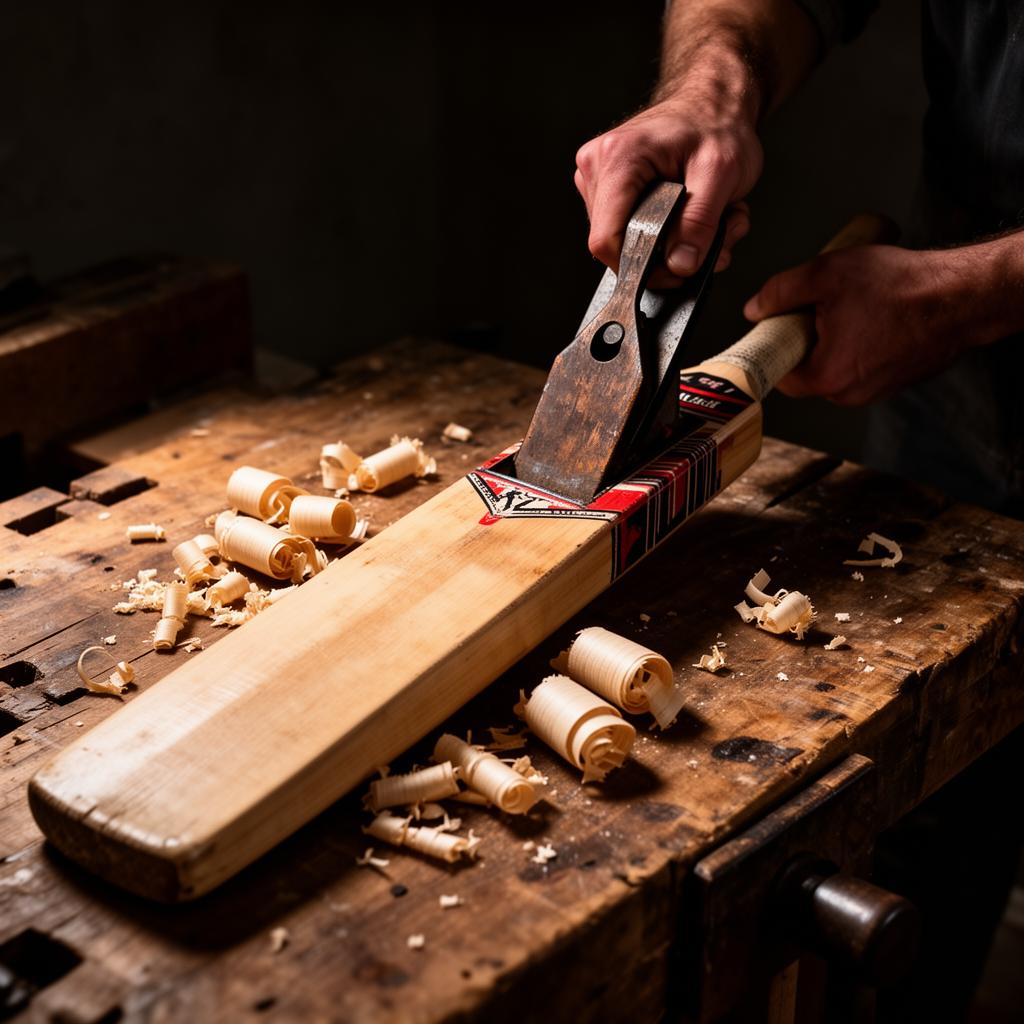
Tucked into a converted Victorian workshop in a Somerset village, the CC HQ is equipped with the same hand-tools cricket bat makers have used for over a century.
Every blade follows the same sequence. The timeline varies by condition; the order does not.
We hunt across the world for heritage blades — English and other willow with sound grain and structural integrity. Each candidate is inspected for splice strength, grain count and toe condition before entering the workshop.
Old decals, lacquers and decades of grime are removed by hand to reveal the heartwood beneath. We never use chemical strippers that would compromise the wood's natural oils.
The face is gently re-pressed using a traditional roller press, then knocked-in over forty patient hours with a mallet for true rebound and a hardened striking surface.
Splice work is reinforced where necessary and the handle re-bound in traditional waxed twine with cobbler's glue. Cane handles are reset or replaced with treble-spring sarawak.
Three coats of raw linseed oil are rubbed in by hand, drying between each application. The blade is signed, dated and entered into the Clegg restoration registry.